


Reading Matters
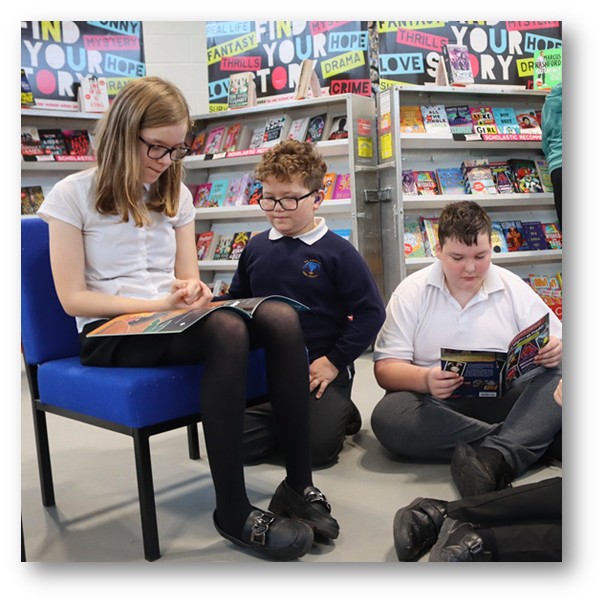
At Fountains High School, we know that reading is one of the most important skills your child can develop. It helps with learning in every subject, builds confidence, and opens up new opportunities.
The government says that children who enjoy reading do much better in school; they can score up to 34 points higher in reading tests than those who don’t enjoy it. That’s why we make reading a big part of school life.
We:
- Help every student find books they enjoy
- Make reading fun and part of daily routines
- Support all reading levels and needs
- Celebrate progress and encourage a love of stories
- Every student has their own individual reading folder which includes a reading record, a phonics reading book or a comprehension-levelled book, and a reading-for-pleasure book of the student's choice.
Whether your child is just starting out or already loves books, we’re here to support their journey.
Learning to Read with Read Write Inc
If you would like homework videos to support your child at home with their current phonics learning, please contact your child's form tutor, who is able to provide an easily accessible QR code or individual link.
Parents/carers play an important role in supporting their young person's reading development and love of reading. Below you can find advice on how to support your child or young person with reading:
Oxford Owl for Home: help your child learn at Home—Oxford Owl
Differentiated Reading Pathways at Fountains High School
As a generic SEND school, our pupils present with a wide range of cognitive, sensory, communication and developmental profiles. For this reason, our reading curriculum is intentionally sequenced and differentiated, ensuring that every learner receives a pathway that is ambitious, appropriate and meaningful for their stage of development.
At Fountains High School, reading pathways are never applied as a one‑size‑fits‑all model. Every pupil is individually assessed and placed on the reading pathway that best aligns with their cognitive profile, communication stage, and developmental readiness. This ensures that each learner receives the most appropriate, ambitious and meaningful reading curriculum for their needs, whether this involves early phonics foundations, sensory‑based literacy approaches, or structured programmes that extend reading fluency.


